

I'm Russell Peach, and I founded Peach Painting in 2015. My team and I have completed over 4,600 projects, including 1,950+ exterior repaints, 1,150+ interior repaints, 850+ commercial jobs and 650+ cabinet refinishes.
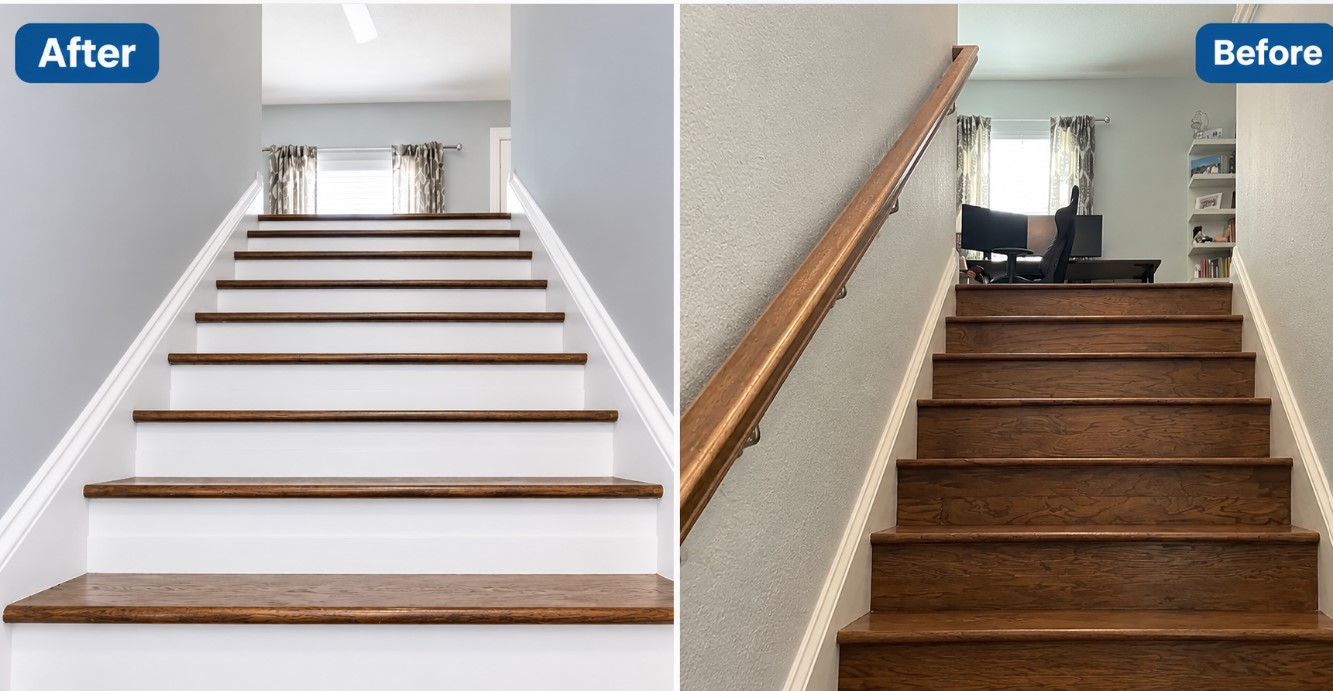
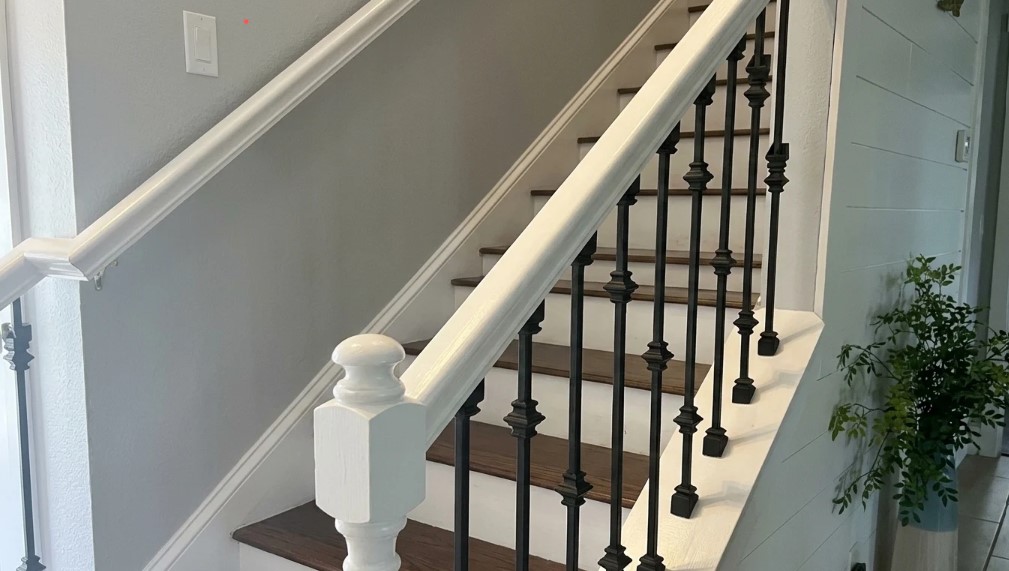
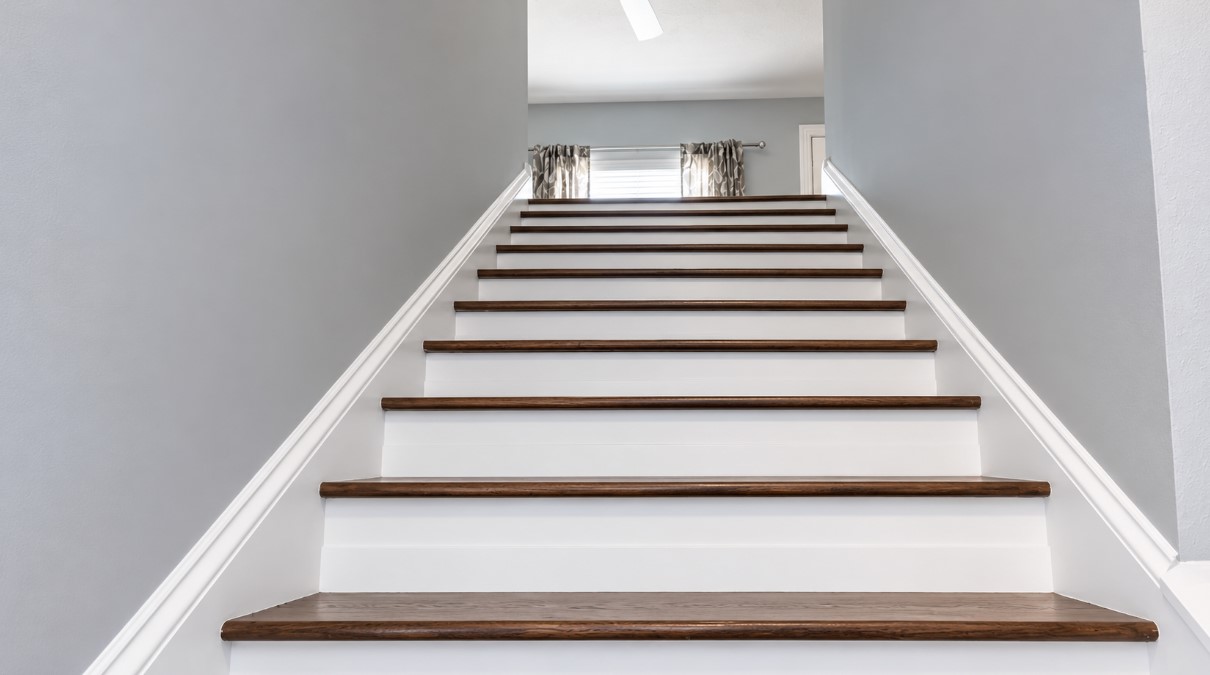
Painting a staircase from dark stain to white comes down to three things: deciding which parts change, protecting the parts that don’t, and priming the stained wood so the old color can’t bleed through. On this Apollo Beach job, we painted the risers, both handrails and the newel post white, and left the stained treads and black iron balusters exactly as they were.
The Stairs Were Dark From Bottom to Top
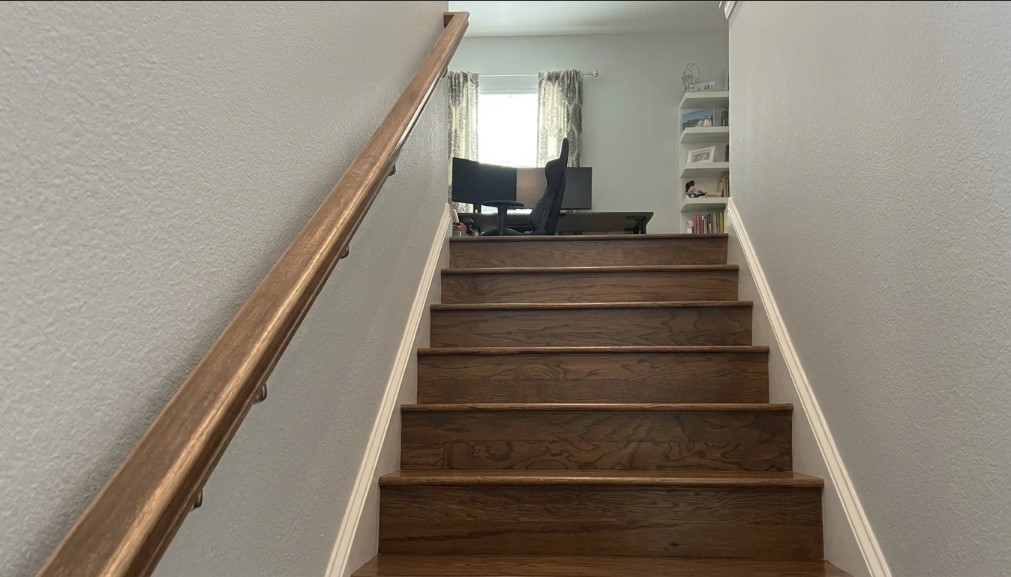
When I first saw this staircase in the Apollo Beach home it ran in one long, straight flight from the entry up to a loft office. Every riser was dark stained wood, and so were both handrails. Against light gray walls and white trim, the whole flight felt heavy and closed in.
Every Tread Got Paper and Tape Before Anything Else
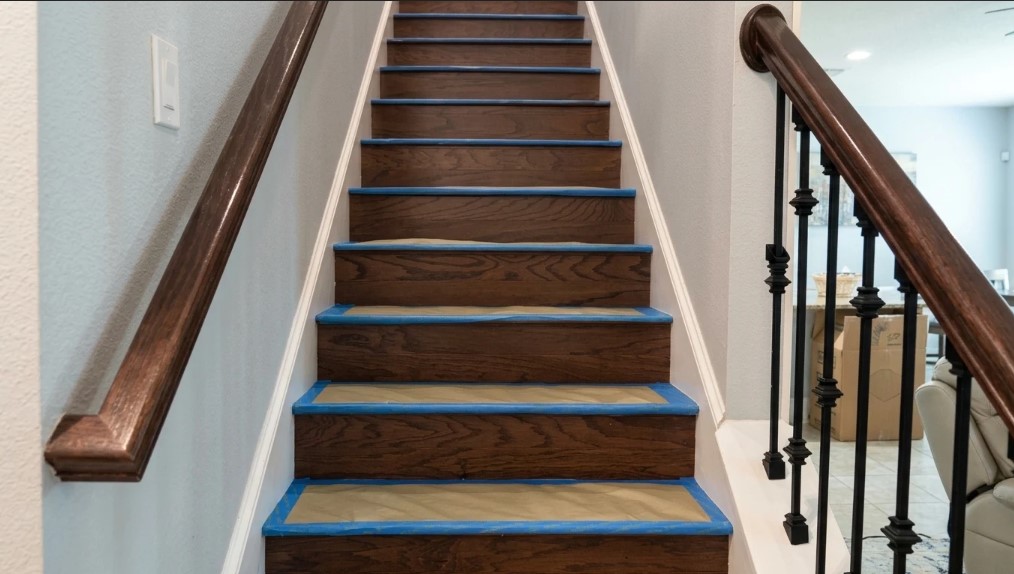
Since the treads were staying stained, I wanted them protected before anything else happened. We covered each tread with brown masking paper and ran blue painter’s tape along every front edge, so primer and white paint had nowhere to land except the parts that were changing.
Anyone who asks me how to paint a staircase without wrecking the steps gets the same answer: stairs are a floor and a wall in one, and the floor half can’t take a single drip.
Stained Wood Needs Cleaning, Sanding and the Right Primer
Handrails carry years of skin oil, so cleaning them isn’t optional the way washing walls first sometimes is. We degreased the rails and risers, then scuff-sanded the old finish so the primer had something to grip.
I’m pickier about primer on stairs than almost anywhere else in a house. Stained oak can push brown tannins through white paint if the primer isn’t made to stop them, and it shows up as yellow or tan patches a few weeks later. Painting stair risers white over dark stain takes a stain-blocking primer first, then two finish coats.
Products We Used on This Staircase
Here’s what we put on the wood, and why I chose each one for this job.
Sherwin-Williams Extreme Block Interior: The stain blocking primer is listed for blocking stains from knots and tannin bleed, with excellent adhesion, and it sands easily. That covered all three problems here: dark stain that wanted to show through white, glossy old finish that needed a strong bond, and handrails that had to be sanded smooth between coats so they feel right under your hand.
Sherwin-Williams Emerald Urethane Trim Enamel: This urethane trim enamel is made for doors and trim and is described as a hard finish that holds up to wear in areas that get used and cleaned often. It also resists yellowing compared with traditional oil-based paints. That’s what I look for in a durable paint for stairs: risers get kicked, rails get gripped every day, and white has to stay white.
We protected the treads with blue painter’s tape and brown masking paper.
The Treads and Balusters Stayed, and That’s the Point
I recommended keeping the treads stained. Treads take every footstep, and stained wood hides that wear far better than paint. Painted treads would also need a non slip paint for stairs, which changes how the steps look and feel, so we left them alone. The black iron balusters were in good shape, so I left those alone too.
We painted the handrail along the balusters, the wall rail and the newel post white, and that’s what gives the staircase its clean two-tone look. If you’ve been scrolling through painting stairs before and after pictures for ideas, look at the rails. On this staircase, they changed the look more than the risers did.
What to Expect From White Risers Over Time
Painting stairs white brightens the whole entry, but risers sit right where toes land. You’ll see scuffs, especially on the bottom few steps. A hard enamel wipes most of them off, and a small amount of leftover paint handles the rest. I’d rather you hear that from me before the job, and good staircase painting contractors should always tell you up front.
Two of our painters finished this flight in one day, from masking to the last coat. We handle stairs like this as part of our interior painting work, and the result is a staircase that finally matches the light, open feel of the rest of the house.
Common Questions About Painted Stairs
Can you paint over stained wood without sanding?
Not well. We clean off hand oils and scuff the old finish on every riser and rail so the primer can grip. Paint over a slick, dirty surface tends to scratch off where hands and feet hit it most.
Will the old stain bleed through white paint?
It can if the primer can’t block it. Dark stain and oak tannins show up as yellow or brown patches on white. A stain-blocking primer seals them in before the white goes on.
Can the treads be painted too?
Yes, but painted treads take the most wear and need a coating made for floors, often with grit added for grip. Many people keep stained treads and paint only the risers and rails.
Can we still use the stairs during the job?
Usually, with care. We plan the work so the stairs stay usable whenever possible, and we tell you at the end of each day which parts to avoid while the paint is fresh.
How do I keep white risers clean?
Wipe scuffs with a damp cloth and mild soap rather than a scrubber. A hard enamel lets most shoe marks come off easily, and a little leftover paint takes care of anything deeper.
Ready to Brighten Your Own Stairs
If dark stairs are making your entry feel heavy, you can price out your stairs with us. We’ll look at the treads, risers and rails, tell you what should change and what should stay, and give you a clear quote.