
The lowest temperature to paint outside is printed on the paint can. For the 100% acrylic latex we use on most Tampa exteriors, that’s 35°F, and oil-based primers usually need it warmer. But that number has to hold for the wall, not just the air, and it has to hold while the paint dries, usually through the first night.
In Tampa, the afternoon is rarely too cold. What cancels a winter painting day for us is a cold front dropping the overnight low, a shaded wall that stays cold into late morning, or heavy dew that leaves the surface wet.
How We Read the Minimum Temperature on Each Can
The lowest temperature to paint outside isn’t one number for every product, because each data sheet lists its own. Before a winter job, we check the minimum temperature for exterior paint on everything going on the house, primer included, and plan the day around the highest one. Here’s what the labels on our regular products say:
| Product | Lowest temp | Watch for |
|---|---|---|
| Sherwin-Williams Emerald Exterior Acrylic Latex | 35°F | Overnight low |
| Sherwin-Williams SuperPaint Exterior Acrylic Latex | 35°F | Shaded walls |
| Sherwin-Williams Exterior Oil-Based Wood Primer | 40°F | Slow drying |
Read the fine print, too. The number usually applies to the surface as well as the air, and a low-temperature formula buys you a few degrees, not a pass on a cold night.
How We Plan Around the Overnight Low
How cold is too cold to paint outside? Any temperature below the label minimum before the paint has dried, and in Tampa that usually happens overnight.
Latex doesn’t stop drying when the crew packs up. It keeps forming its film for hours, and if the temperature drops under the minimum during that window, the film can’t knit together properly. The wall can look fine the next morning and then crack or chalk years early.
Our winter afternoons are usually mild, but a strong cold front can push the night into the 40s or even the 30s.
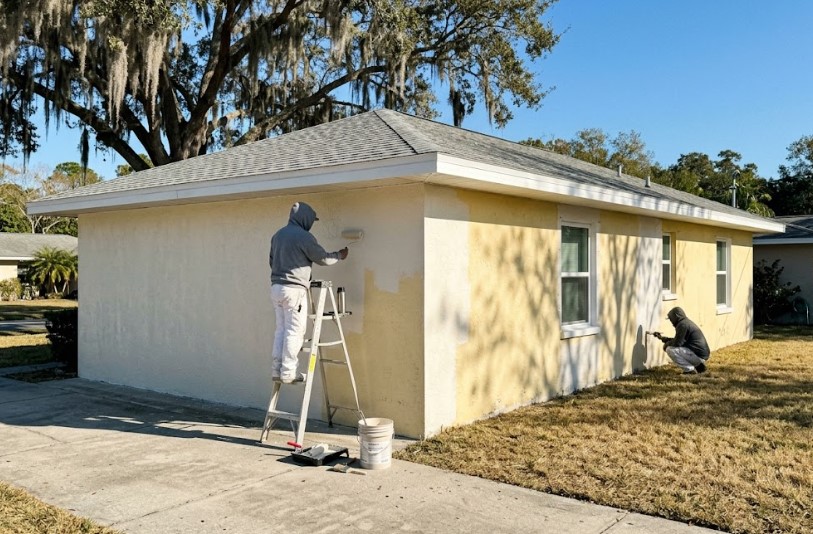
On a January 2026 repaint in Tampa, the forecast low behind a front was 38°F, so we waited until the sun had warmed the walls before starting, painted the sunny sides first, and pushed the shaded side to the next afternoon.
Losing that time was a small price compared with repainting a wall that failed.
My rule is simple. The last coat of the day goes on early enough to dry before the sun drops, which in winter means we stop rolling by 2 p.m.
Why We Measure the Wall, Not the Air
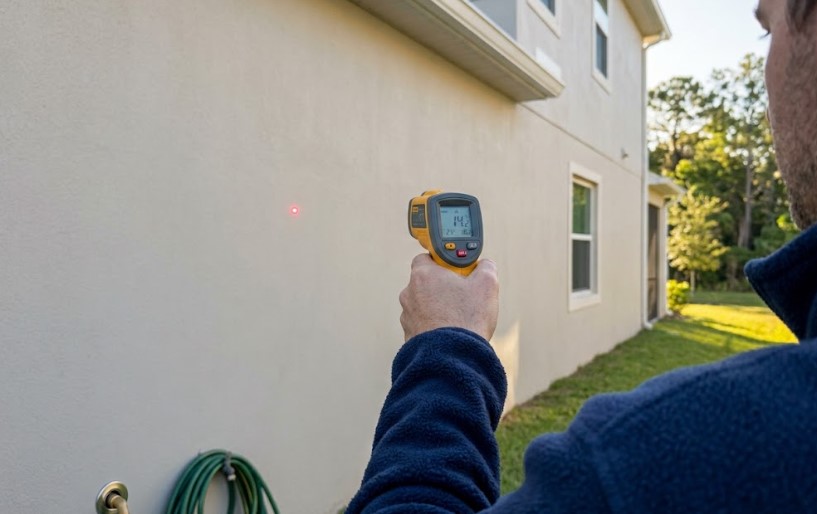
The forecast gives you air temperature, but paint cares about the surface it sits on, and that can be several degrees colder. Stucco and concrete block hold the night’s chill. A shaded or north-facing wall may not see direct sun at all on a December day, so the driveway can feel comfortable while the wall behind the hedge is still below the label minimum.
So we check instead of guessing. On a cool morning, someone on the crew takes an infrared thermometer to each side of the house before the first can opens, starting with the shaded ones. If a wall isn’t warm enough yet, we start on a side that is and come back to it later in the day.
How We Work Around Heavy Morning Dew
The clear, cold winter nights that drop the temperature are the same nights that leave walls wet by sunrise. Once a surface cools below the dew point, moisture condenses right onto it, and on stucco it settles into the texture where it’s hard to see. Paint rolled over that film won’t bond the way it should.
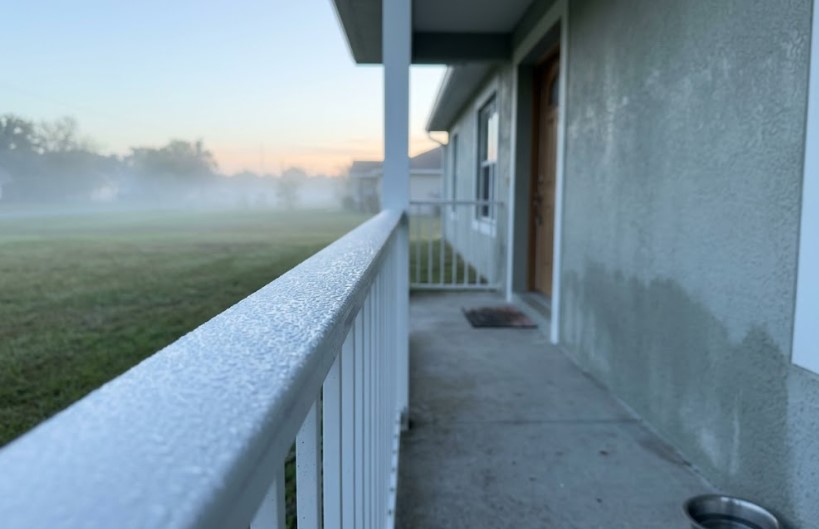
That’s why our winter days start later than our summer ones. We wait for the sun to dry the walls, check the shaded sides by hand, and finish early enough that the last coat is dry before the evening dew settles.
Dew is really the winter face of a moisture problem we manage all year, and painting in Florida humidity takes the same patience in July, just for different reasons.
Why Heat Gives Our Crews More Trouble Than Cold
Honestly, in Tampa the cold days are the easy ones to plan around. Our harder problem sits at the other end of the label, because most data sheets list a maximum temperature too, and a west-facing wall in July gets far hotter than the air around it. Paint on a hot surface dries too fast, shows lap marks, and doesn’t level out.
In summer we chase the shade. The crew starts early, works the west side in the morning and the east side in the afternoon, and keeps a hand on the wall before every new section. It’s the same idea as winter, just flipped: watch the wall, not the forecast.
Why We Like Winter for Tampa Exteriors
Is winter a good time to paint outside in Tampa? For us it’s often one of the best stretches of the year. Humidity eases, the afternoon storms mostly stop, and the crew isn’t fighting hot walls. Most winter days are paintable; we just work a shorter window in the middle of the day and keep an eye on the fronts.
The work before the paint matters even more this time of year. Washed stucco takes longer to dry out on a cool day, so prepping your home for exterior painting needs a little more lead time in January than it does in May.
FAQ
What happens if paint freezes or gets too cold before it dries?
If you’re asking how cold is too cold to paint outside, it’s any temperature below the label minimum before the paint has dried. Paint that gets that cold can’t form a proper film, so it may crack, chalk, or peel early even if it looks fine the next morning.
How long does exterior paint need before the temperature drops?
Long enough to dry past the tacky stage while it’s still above the label minimum, which for our products is about 4 hours. Full curing takes much longer.
Is there special paint for cold weather?
Yes, some exterior lines are made to go on at lower temperatures than standard paint. They widen the window by a few degrees, but they don’t change anything about dew, shaded walls, or the overnight low.
Let Us Pick the Painting Days
We handle exterior painting in Tampa all winter, and watching the fronts, the dew, and the shaded walls is part of every job, backed by our 5-year workmanship warranty. Ask for a free estimate and we’ll plan your repaint around the weather, not just the calendar.