

I'm Russell Peach, and I founded Peach Painting in 2015. My team and I have completed over 4,600 projects, including 1,950+ exterior repaints, 1,150+ interior repaints, 850+ commercial jobs and 650+ cabinet refinishes.
Our top exterior paint colors in 2026 are creamy white on a ranch, soft gray on a two-story stucco house, blue-gray on a Craftsman, navy on a small cottage or bungalow, and deep green or warm brown on a Victorian and greige beside red brick: those are the six colors I’d point you to. Each one is matched to a house style, not a trend.
Picking exterior paint colors for older homes starts with the style of the house. There’s no official ranking of the best exterior paint colors, because a shade that looks great on one house can look wrong next to a different roof, brick or yard.
Creamy White Keeps a Ranch Looking Clean and Wide
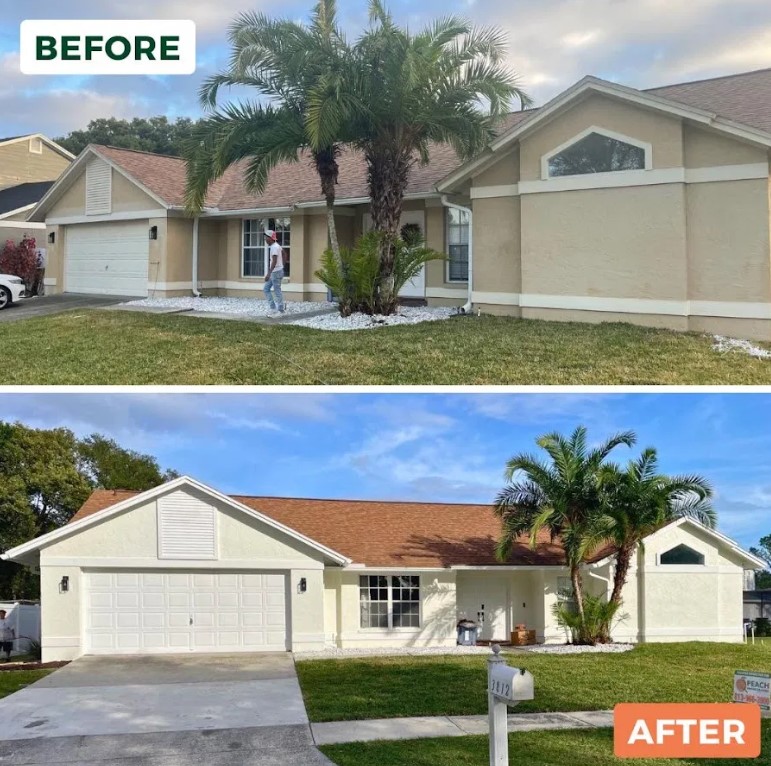
A ranch is long and low, and a light body color stretches it out and makes the whole house look tidy. You can see that on a ranch we did in Wesley Chapel in August 2026, where the beige stucco had gone flat and dated.
We went with a creamy white instead of a stark one. Bright white can glare in full afternoon sun, and the creamy shade still gets along with the warm brown roof. Light shades are also the easiest paint colors for Florida homes to live with, since they bounce sunlight back instead of soaking it up. If you’re weighing paint colors for ranch homes, start here: a light body, crisp trim, and let the roof and landscaping bring the color.
Soft Gray Calms a Tall Two-Story Stucco House
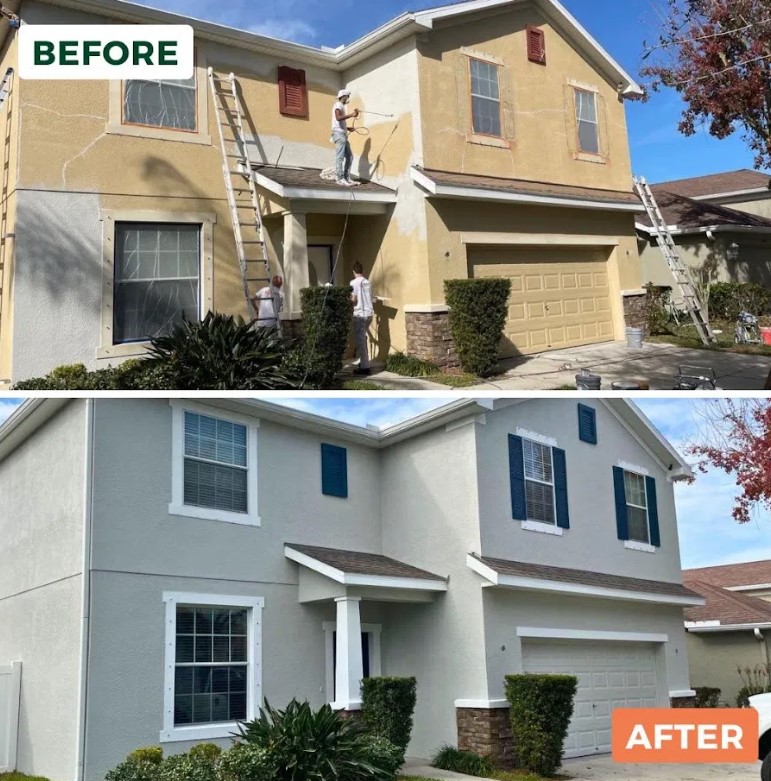
The white streaks in the before photo of a two-story in Riverview, a project we started in January 2026, are stucco cracks we patched before any color went on. Paint alone won’t hide cracks for long, so they get filled first.
The tan and yellow walls had faded unevenly, and soft gray was the fix. Two stories of wall is a lot of surface, and gray keeps that size calm where a strong tan can feel heavy. With white trim, navy shutters and the stone kept at the base, it stands apart from the tan and beige exterior house colors you see all over that neighborhood. Gray, greige and off-white are the paint colors for stucco homes I suggest most, because stucco texture can make strong colors look blotchy in harsh light.
Blue-Gray Gives a Craftsman Porch Something to Stand Against
Craftsman homes are all about the porch: square columns, stone bases and deep eaves. On a Craftsman we repainted in April 2026, the beige siding was so close in tone to the stone bases that the stone almost disappeared.
Blue-gray on the siding and gable fixed that. The stone now looks warm against the cool body, the white columns and trim jump forward, and the gray roof finally matches the walls. Blue-gray shows up in a lot of exterior paint color trends, but here it earned its place because of the stone and roof, not because it’s popular. The door went almost black to anchor the middle of the porch. Matching the body color to what stays, like stone and roofing, is the first step on all our exterior painting jobs.
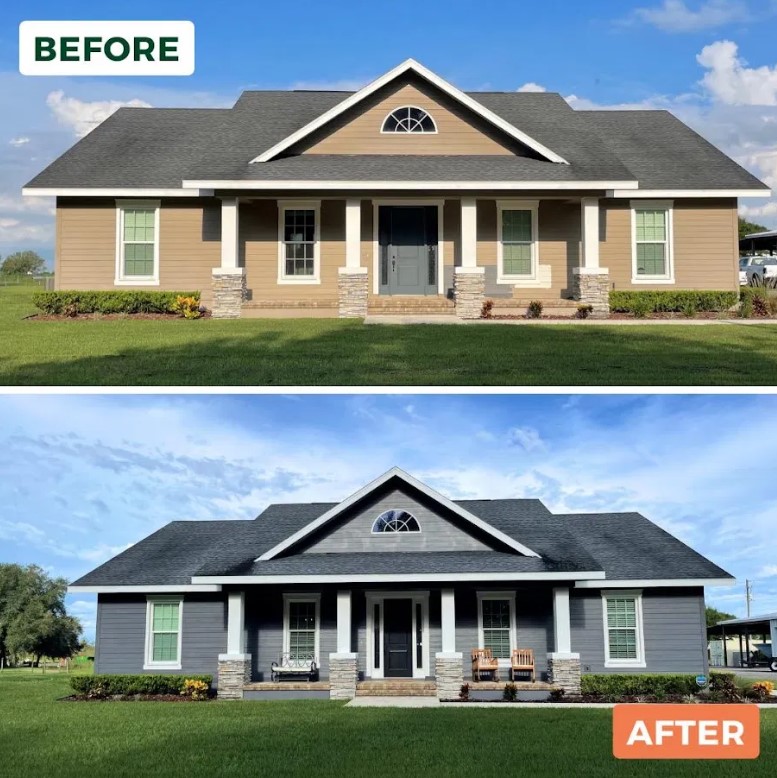
We kept the columns and trim white so they’d stand out against the new blue-gray siding and the stone bases below them.
Navy Gives a Small Cottage Real Presence
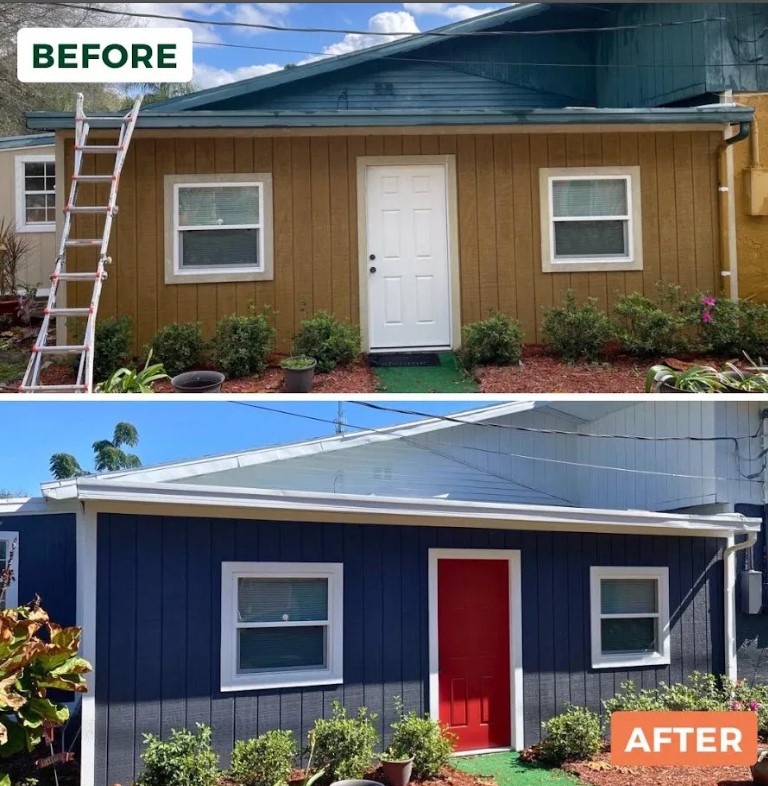
A dark color can make a small house look solid and finished instead of plain. Its mustard-tan board-and-batten siding had faded and looked tired.
On this cottage, we painted the siding navy, brought the trim, fascia and gable up to white, and the homeowners picked a red door. This paint before and after shows why navy works here: the vertical battens cast thin shadows that read much better on a dark color than on mustard. The one catch is Florida sun, so if a wall bakes all afternoon, expect to refresh navy a little sooner than a light color.
Deep Green or Warm Brown Suits a Victorian
Victorian homes carry a lot of trim, brackets and layered details, and a deep green or warm brown body gives all that detail a dark background to stand against. Pick a light trim color and one accent for the door or window sashes, and stop at three colors so the house looks planned, not busy. Before you commit to a deep body color, it’s worth seeing how colors hold up on houses around here.
Greige Settles In Next to Red Brick
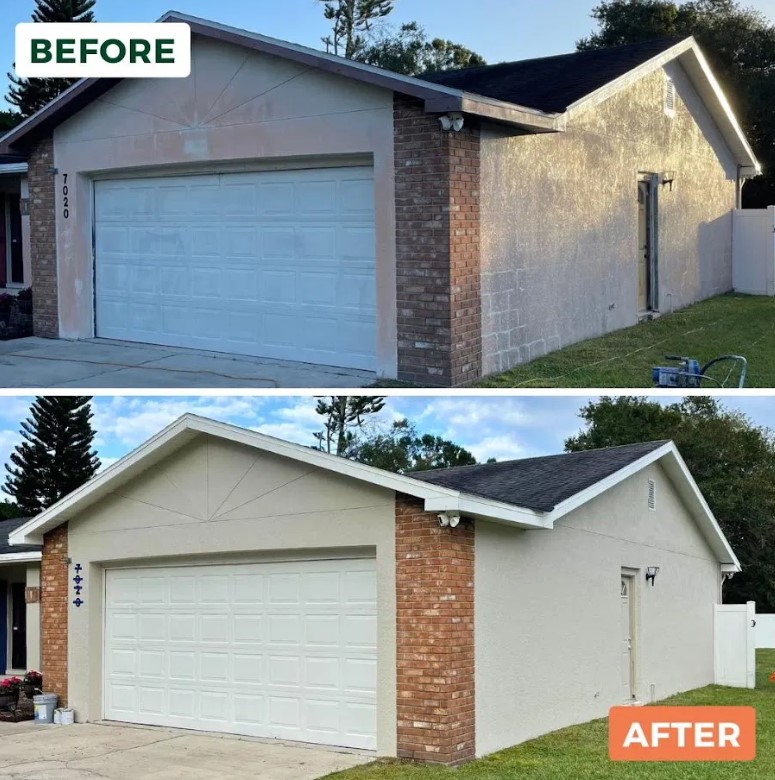
Red brick isn’t going anywhere, so the wall color has to get along with it. That was the point on another Tampa home we painted in October 2026, where the old pinkish beige stucco fought the brick columns and showed every stain. Greige, a gray with a little beige in it, sits beside red brick without competing. The brick becomes the accent, and the walls look clean instead of tinted.
Frequently Asked Questions
Do dark colors fade faster in Florida?
Usually, yes. Deep shades soak up more heat than light ones, so they tend to lose their richness first. Good paint and solid prep help a lot, and dark trim or doors are easy to refresh.
Can you paint stucco lighter than it is now?
Yes. Going from tan to white or gray is common. We wash the walls, patch cracks and put on enough coats to cover the old color evenly, so nothing patchy shows through when the sun hits it.
Should the trim always be white?
Not always, but white trim is the easiest way to sharpen almost any body color. On darker houses it frames the windows and doors. On very light houses, a slightly deeper trim color can add some needed depth.
How do I pick a color that works with my roof?
Paint a large swatch on the wall near the roofline and look at it in morning and late-day light. A cool gray roof usually leans toward blues and grays, while a warm brown roof leans toward creams.
Do I need HOA approval to change my house color?
If you live in an HOA community, usually yes. Many boards keep an approved color list, so check it before you fall for a shade. We’re glad to work from that list with you.
Start With the Style, Then the Color
If your home still wears the color it had when you bought it, look at its style first. A ranch, a stucco two-story, a Craftsman, a cottage and a Victorian each have a color that fits them. Get in touch, tell us what style your house is, and we’ll bring a few shades out to see on your own walls.